Patients come to my clinic having done a lot of research. Most of them arrive having already formed an opinion about FUE versus DHI — usually that DHI is the premium option and FUE is the standard one. I understand where this comes from. It is how a large part of the hair transplant industry markets itself.
My job in the consultation is to reframe the question. Because the question should not be “which technique is better?” The question should be “what does this specific patient need, and what approach gives them the most natural long-term result?”
What FUE Hair Transplant Actually Involves
FUE — Follicular Unit Extraction — means individual follicular units are extracted one by one from the donor area using a specialized punch device, then implanted into thinning or bald areas following a planned design.
FUE is widely used because it allows flexible planning, avoids a visible linear scar, and enables natural-looking placement when done well. But “done well” is the operative phrase. The extraction tool does not define the quality. What defines quality is how the grafts are handled, how the design is planned, and how the placement respects natural hair direction.
What DHI Adds — and When It Helps
DHI — Direct Hair Implantation — uses a specialized implantation device that allows grafts to be placed directly without pre-made channels. This can offer more control over angle and direction in certain cases, particularly along the frontal hairline where precision matters most.
Where DHI may genuinely help:
- Detailed frontal hairline placement requiring precise angle control
- Areas with existing hair where channels need careful placement to avoid damaging grafts
- Situations where controlled density in a small targeted area is the priority
Where DHI is sometimes oversold: as a universally superior option for every patient regardless of their specific needs. That is a marketing claim, not a clinical one.
“A poorly planned DHI result looks artificial. A carefully planned FUE result looks completely natural. The technique is not the variable that matters most.”— Dr. Karamat Ullah Miami
Clinical Perspective
What FUE actually means in practice
FUE means individual follicular units are extracted one by one from the donor area. The extraction device, speed, and graft handling quality all vary. Two clinics can both call what they do FUE and produce very different outcomes. The technique name is only one part of the equation.
What DHI adds — and what it does not
DHI uses a specialized implantation device that allows grafts to be placed without pre-made channels. In selected cases this can offer more control over angle and direction. But it is not magic. Poorly designed DHI results in unnatural hairlines. Well-planned FUE produces beautiful ones. Planning matters more than the tool.
The honest comparison patients rarely hear
Clinics often market DHI as premium and FUE as standard. This is a commercial framing, not a clinical one. Suitability depends on the individual patient's scalp, donor quality, density goals, and treatment strategy. I choose based on the patient in front of me, not a price tier.
What I focus on that most marketing ignores
Hairline irregularity. Single-hair frontal placement. Angle variation across the scalp. Donor zone management over the patient's lifetime. These are the things that determine whether a result looks natural in ten years, not the acronym on the brochure.
The Part That Actually Determines Natural Results
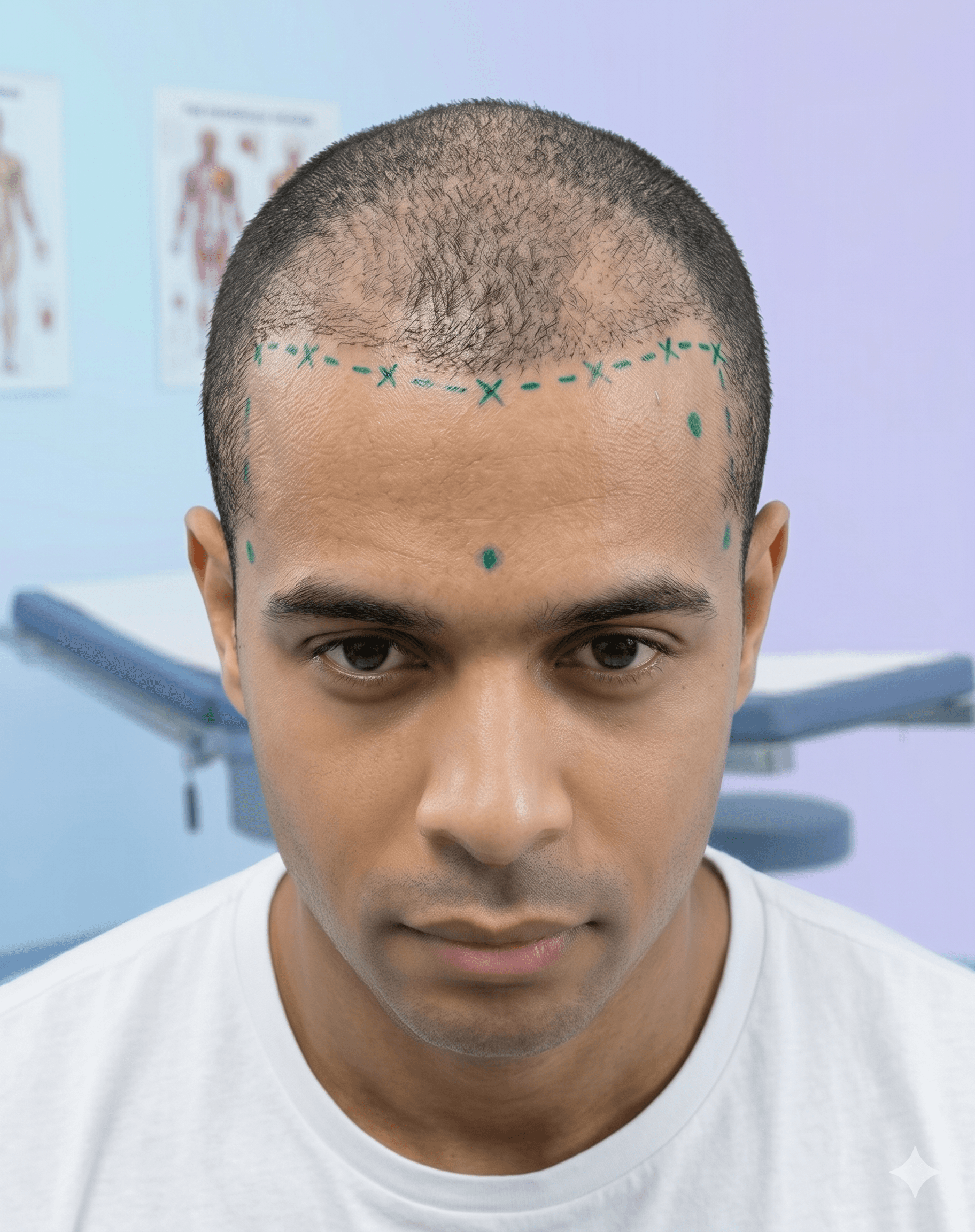
Hairline design. This is what I think about most when I plan a hair restoration procedure — and it is what most marketing completely ignores.
When I design a hairline, I consider:
A hairline that is too low will look unnatural as a patient ages and surrounding hair recedes further. A hairline that is too sharp looks planted. The best results I have seen — in my own work and in genuine patient outcomes globally — come from restraint and artistry, not from maximising graft numbers.
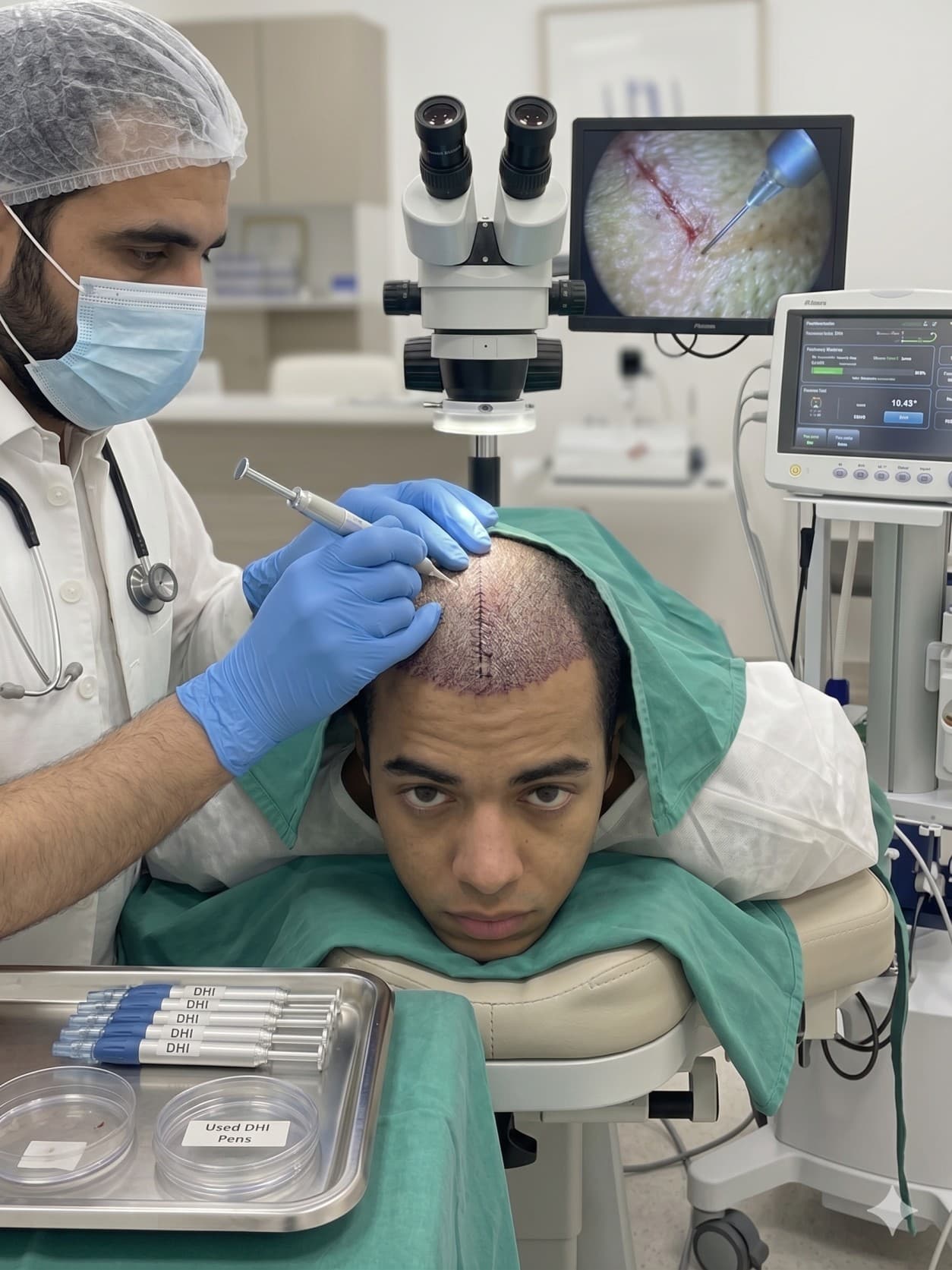
DHI Implantation
Precision placement during active procedure at Miami Plastic Surgery Peshawar
The Truth About Graft Numbers
Patients often come comparing graft quotes between clinics, as if more grafts automatically means a better result. I understand why — it feels like a concrete measure of value. But this thinking can lead to poor decisions.
Overpacking grafts into an area damages existing hair follicles and reduces long-term coverage.
Excessive extraction from the donor zone depletes resources needed for future sessions.
Density should be distributed naturally — dense in some zones, lighter in others — to look realistic.
When I plan a session, I plan for the individual patient in front of me — not for the biggest number I can put on a quote. Sometimes the right answer is fewer grafts placed more carefully in more important areas.
Recovery — What FUE and DHI Have in Common
Despite the marketing differences, recovery after both FUE and DHI is broadly similar. Both involve:
- Initial scabbing around grafts that clears within the first two weeks
- Temporary shedding of transplanted hair within weeks of surgery — this is normal and expected
- Early new growth beginning around three to four months
- Continued maturation through six to twelve months
- Final results often not fully visible until twelve months or beyond
The technique used does not significantly shorten or lengthen this timeline. Patience is a requirement for both. I always tell patients: what you see at three months is not your result. What you see at twelve months is closer. And for some patients — particularly with crown work or coarser hair — the full picture continues to develop beyond that.
“The best hair restoration I have done was not the most technically complex. It was the most carefully planned.”— Dr. Karamat Ullah Miami
How to Honestly Evaluate a Hair Transplant Clinic
Rather than asking which technique a clinic offers, I would encourage patients to ask:
Can I see unedited before and after photos from this specific surgeon — at twelve months?
Does the surgeon design hairlines personally, or is it delegated?
Does the clinic discuss future hair loss planning honestly, or only the current session?
Is the graft estimate based on my specific donor quality, or a standard quote?
Will my consultation be with the surgeon who will perform the procedure?
Those questions will tell you more about a clinic than whether they use FUE or DHI.
— Dr. Karamat Ullah Miami, Miami Plastic Surgery & Hair Transplant Center, Peshawar